
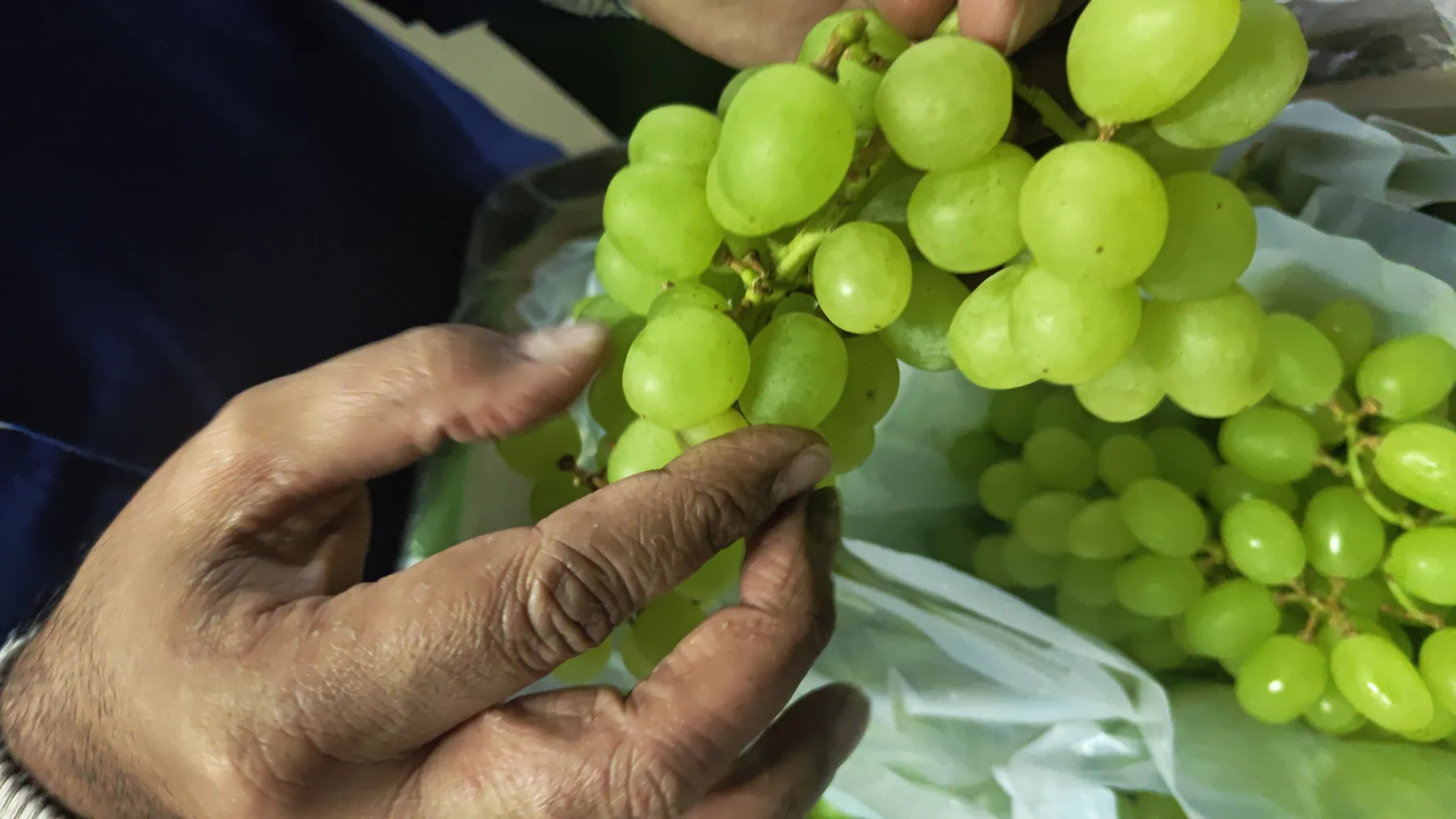
Post-Harvest Physiological Challenges in Table Grapes
Table grapes (*Vitis vinifera*) are highly perishable non-climacteric fruits. Major post-harvest degradation mechanisms during 60+ day export sea transit include:
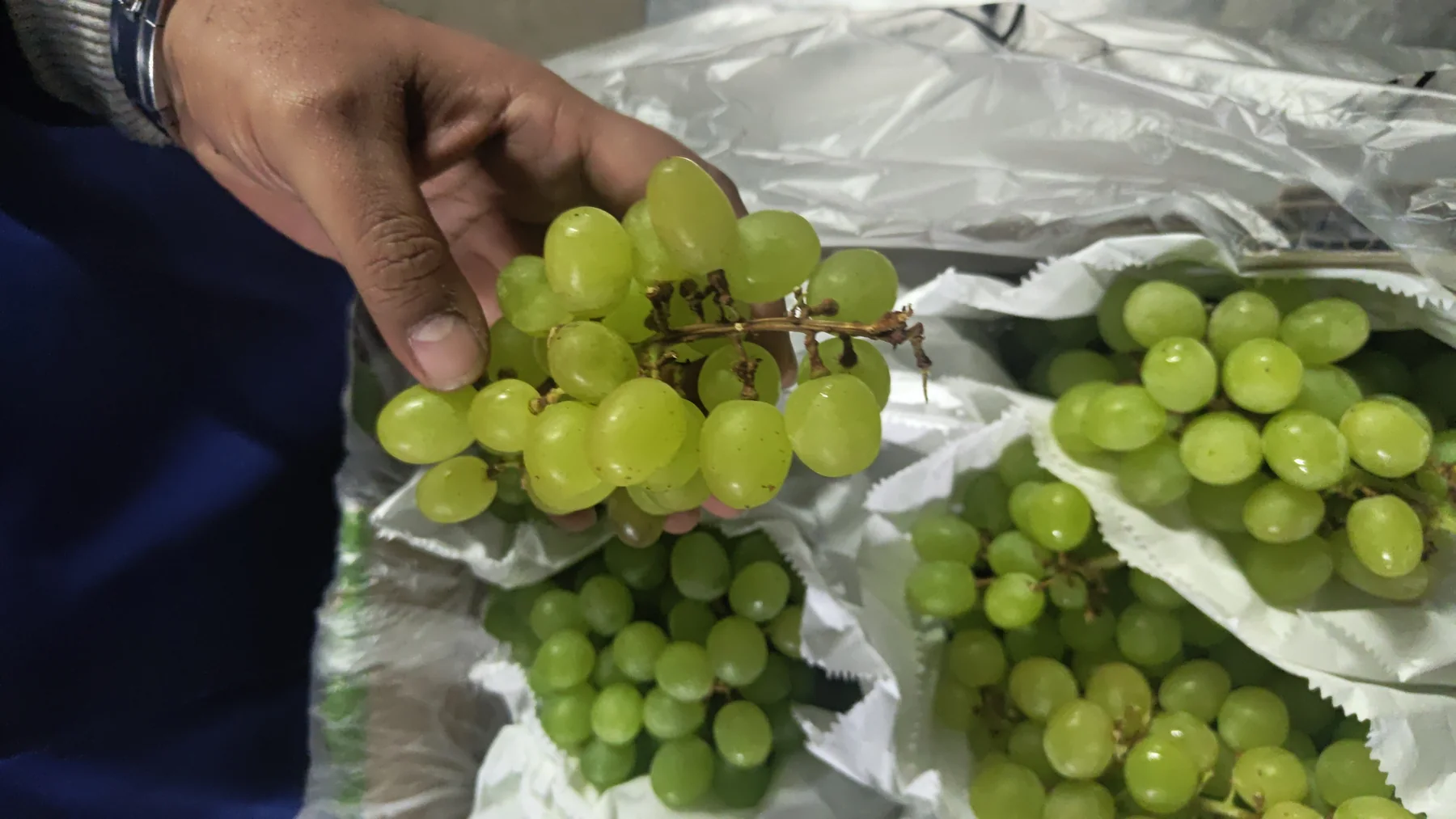
- Rachis & Stem Browning: Rapid moisture loss leads to stem drying, turning stems brittle and brown, reducing retail visual grade.
- Gray Mold Rot (*Botrytis cinerea*): Fungal spore germination accelerated by free condensation droplets inside export cartons.
- Berry Shatter & Softening: Loss of cell turgor pressure causing grapes to detach from the pedicel during shipping vibrations.
Recommended Cold-Chain & Storage Protocol
| Parameter | Recommended Export Value | VAMSA Technical Impact |
|---|---|---|
| Storage & Transit Temp | -0.5°C to 0.5°C (31°F – 33°F) | Prevents freezing injury while minimizing respiration rate |
| Relative Humidity (RH) | 90% – 95% | Prevents stem desiccation and berry weight loss |
| Target $O_2 / CO_2$ Balance | 5% $O_2$ / 10% $CO_2$ | Modifies respiration without causing anaerobic off-flavors |
| Liner Specification | VAMSA Fresh Keeper Grade FK-STD (22 × 41 in, 25µm) | Active Silver Nano ethylene conversion + SO₂ pad compatible |
| Max Export Transit Duration | 60 – 75 Days | Extends shelf life by 2.5× over standard polyethylene liners |
Empirical Trial Comparison: Control vs VAMSA Fresh Keeper
| Metrics (60 Days Storage @ 0°C) | Control Liner Bag | VAMSA Fresh Keeper Liner |
|---|---|---|
| Stem Greenness Score (1-5 Scale) | 1.5 (Severely Brown & Dry) | 4.7 (Vibrant Green & Flexible) |
| Weight Loss (%) | 4.8% Net Weight Loss | 0.9% Net Weight Loss (-81%) |
| Botrytis Decay Incidence (%) | 12.4% Affected Berries | < 0.8% Affected Berries |
| Berry Firmness (N) | 3.2 N (Softened) | 6.8 N (Crisp & Plump) |
Packhouse Standard Operating Procedure (SOP)
- Pre-Cooling: Rapidly pre-cool harvested grapes to 1°C pulp temperature in forced-air cooling rooms within 4 hours of harvest.
- Liner Fitting: Open VAMSA Fresh Keeper bag cleanly inside the 5kg or 9kg export carton, smoothing bottom corners.
- SO₂ Pad Placement: Place approved dual-release Sulfur Dioxide pad over the top grape bunches if required for long-distance transit.
- Air Evacuation & Sealing: Press out excess headspace air gently, fold top liner flaps neatly, and twist-tie or secure with rubber band.
- Reefer Loading: Maintain uncompromised -0.5°C reefer airflow during container voyage.
Need a recommendation for Grapes?
Send your grape variety (Thompson, Crimson, Sharad, Red Globe), pack size, origin, destination, and target transit duration to VAMSA specialists.
Request Grape Application Guide →